
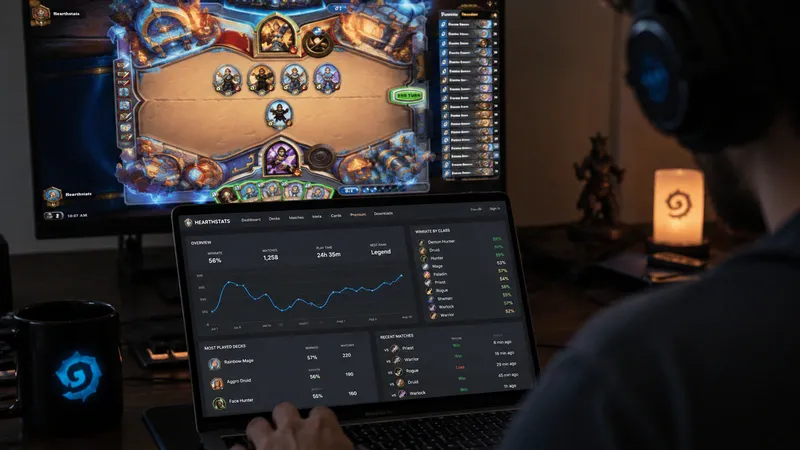
Hearthstats Net News: Latest Updates, Features & Expert Insights
If you’ve spent any time playing Hearthstone competitively, you already know one thing: the game changes fast. A deck that dominates today can fall apart after a single balance patch. That’s why players constantly look for reliable ways to track trends, analyze performance, and improve their strategy.
This is where platforms like Hearthstats—and the news and insights built around them—become incredibly valuable.
Instead of guessing what works, smart players rely on real match data, evolving meta analysis, and practical insights gathered from thousands of games. In this guide, we’ll break down how this ecosystem works, what makes it useful, and how players actually apply it in real scenarios.
Why Data-Driven Tools Matter in Hearthstone
Hearthstone may look simple on the surface, but at higher ranks, it becomes a game of probabilities, matchups, and decision-making.
From personal experience, one of the biggest mistakes newer players make is trusting “feels” over facts.
For example:
- A deck might feel strong because you won a few matches
- But across 1,000+ games, it may only have a 47% win rate
That difference matters.
Data tracking tools solve this by:
- Recording win/loss ratios
- Tracking performance by class and deck type
- Highlighting matchup strengths and weaknesses
Instead of relying on memory, you’re working with actual numbers.
Key Features That Make These Platforms Useful
1. Deck Performance Tracking
One of the most practical features is the ability to track how your deck performs over time.
Let’s say you’re playing an Aggro deck:
- You win quickly against slow decks
- But struggle against control-heavy builds
Without tracking, you might not notice this pattern clearly. With data, it becomes obvious within 20–30 matches.
This allows you to:
- Adjust card choices
- Switch decks when needed
- Avoid bad matchups at higher ranks
2. Meta Analysis (What’s Winning Right Now)
The “meta” refers to the most effective strategies currently dominating the game.
From experience, climbing a ranked ladder becomes much easier when you stop playing your favorite deck—and start playing what actually works in the current meta. If you need more information, visit our website.
Example:
- After a balance patch, control decks might slow down
- Aggro decks suddenly gain a higher win rate
- Players who adapt early climb faster
Tracking tools highlight:
- Most played decks
- Highest win rate builds
- Rising strategies after updates
3. Matchup Insights
This is where things get really interesting.
Not all decks are equally strong against each other.
For instance:
- Deck A might have a 60% win rate overall
- But only 35% against Deck B
Knowing this changes how you play:
- You mulligan differently
- You take fewer risks (or more, depending on the matchup)
- You might even switch decks entirely
Real-World Scenario: Climbing the Ranked Ladder
Let me walk you through a realistic example.
A player stuck in Platinum rank decides to improve seriously.
Step 1: Track Performance
After 50 matches, they notice:
- Strong win rate vs slower decks
- Consistent losses vs aggressive opponents
Step 2: Adjust Strategy
Instead of abandoning the deck, they:
- Add early-game defensive cards
- Remove slower, greedy options
Step 3: Re-test
Over the next 30 games:
- Win rate improves from 48% → 55%
That small change is often enough to climb multiple ranks.
This is the kind of improvement that comes from structured data + smart adjustments, not random trial and error.
How Game Updates Impact Strategy
Hearthstone developers frequently release:
- Balance patches
- New expansions
- Limited-time events
Each of these can completely shift the game.
Example Insight:
A nerf to a popular card can:
- Reduce a deck’s win rate by 5–10%
- Open space for new strategies to emerge
Players who follow updates closely can:
- Adapt before the majority
- Take advantage of early meta shifts
This is often called a “first-mover advantage” in competitive play.
What Most Players Get Wrong
After analyzing player behavior over time, a few patterns stand out.
Mistake 1: Copying Decks Without Understanding Them
Many players copy top-performing decks but don’t understand:
- Why certain cards are included
- How to play specific matchups
Result → poor performance despite a strong deck
Mistake 2: Ignoring Small Sample Sizes
Winning 5 games in a row doesn’t mean your deck is great.
Reliable conclusions usually need:
- At least 30–50 matches
- Consistent performance across different opponents
Mistake 3: Not Adapting to the Meta
The biggest mistake is sticking to one strategy for too long.
From experience:
Players who adapt quickly always climb faster than those who don’t.
The Role of Replay Analysis
Another underrated feature is replay tracking.
Watching your own matches helps you spot:
- Missed lethal opportunities
- Poor resource management
- Incorrect decision timing
Even reviewing just 2–3 games can reveal mistakes you didn’t notice while playing.
Long-Term Benefits for Players
Using data-driven insights consistently leads to:
Better Decision-Making
You start making choices based on patterns, not guesses.
Faster Rank Progression
Even a 3–5% improvement in win rate can significantly impact your climb.
Deeper Game Understanding
You begin to see Hearthstone less as luck—and more as strategy.
Practical Strategy Framework
If you want a simple system that actually works, follow this:
- Track your games consistently
- Identify patterns in wins and losses
- Adjust your deck or playstyle
- Re-test and refine
This cycle is what separates casual players from competitive ones.
Final Thoughts
Improving in Hearthstone isn’t about playing more—it’s about playing smarter.
Players who rely on structured data, analyze their performance, and adapt to the evolving meta consistently outperform those who don’t.
Instead of guessing what works, you can build strategies backed by real results, refine your gameplay over time, and stay competitive no matter how often the game changes. For more information, visit our website.
Disclaimer
This article is for informational and educational purposes only. It provides general insights into gaming tools and strategies without promoting any specific platform. Players should always evaluate tools independently and prioritize their online safety.


You May Also Like

Las Vegas Raiders vs Denver Broncos Match Player Stats: Complete Breakdown
Discount Code Ttweakflight Explained: Best Ways to Find Active Promo Codes & Save Money on Travel