Blog ThriftyEvents.net: Easy Budgeting Tips for Successful Event Planning
Planning an event can be exciting until the expenses start adding up. Venue fees, food, decorations, entertainment, invitations, rentals, and unexpected charges can quickly turn a simple celebration into an expensive project. That is where Blog ThriftyEvents.net offers a useful starting point. The site focuses on budget-conscious event planning, DIY ideas, and practical ways to control spending without making an event feel cheap or unmemorable.
The key idea is simple: saving money does not mean removing everything enjoyable. It means deciding where your money creates the most value and finding smarter alternatives for everything else.
What Is Thrifty Event Planning?
Thrifty event planning is not simply about choosing the cheapest option. It is about getting the best result from the money available.
A low-cost venue may look attractive, for example, but it could become expensive if you need to rent tables, chairs, lighting, and sound equipment separately. A slightly more expensive venue with those items included might actually provide better value.
This is why successful budget planning starts with the total cost, not just the advertised price.
ThriftyEvents.net focuses on this broader approach, covering budgeting, event planning, DIY projects, venue decisions, and ways to reduce unnecessary spending.
Start With a Realistic Event Budget
Before booking anything, establish a maximum spending limit.
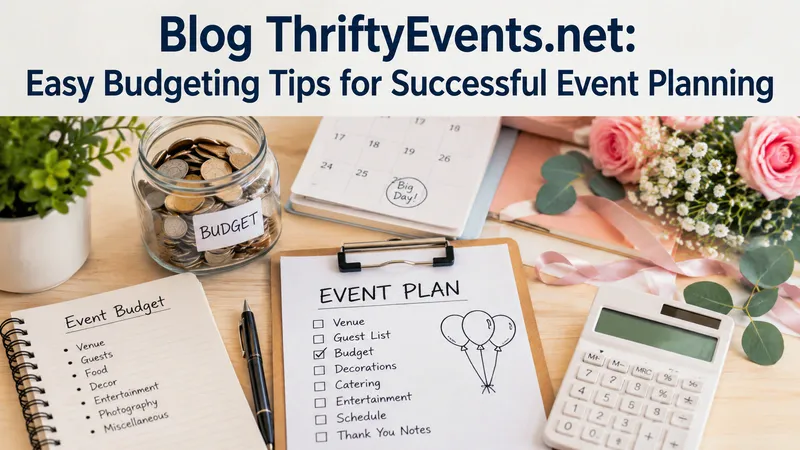
Write down the amount you can comfortably afford and divide it into categories such as:
- Venue
- Food and drinks
- Decorations
- Entertainment
- Rentals
- Invitations
- Transportation
- Photography
- Emergency expenses
A detailed budget makes it easier to see where your money is going. ThriftyEvents.net also recommends organizing expenses into clear categories and tracking actual spending against your original estimates.
A useful trick is to create three spending levels:
Essential: Things the event cannot function without.
Important: Items that noticeably improve the guest experience.
Optional: Extras that you can remove if the budget becomes tight.
This approach prevents small purchases from quietly consuming money needed for more important expenses.
Choose the Venue Carefully
The venue often becomes one of the largest event expenses, so choosing it carefully can make a major difference.
Do not compare rental prices alone. Ask what the price includes.
A venue that provides tables, chairs, basic lighting, parking, or cleanup may save you from paying several separate vendors.
You can also consider community centers, public halls, restaurants with private rooms, parks, libraries, or private homes when appropriate.
Another practical strategy is choosing an off-peak date. Weekday events or celebrations outside the busiest season may provide more affordable options, although prices vary by location and venue.
Reduce the Guest List Without Making It Awkward
Guest numbers affect almost every part of an event budget.
More guests mean more food, seating, invitations, drinks, favors, and sometimes a larger venue.
Instead of inviting everyone you know, identify the people who are genuinely important to the occasion. For family events, you might create a core guest list first and then add people only if the budget allows.
This is not about excluding people unnecessarily. It is about making sure the event size matches what you can realistically afford.
Save on Decorations With Smart DIY Ideas
Decorations offer some of the best opportunities for creativity.
You do not need expensive centerpieces to make a room look polished. Reusable glass jars, candles, fabric, paper decorations, seasonal flowers, greenery, and simple table arrangements can create an attractive setting.
ThriftyEvents.net highlights DIY projects and creative reuse as practical ways to personalize an event while controlling costs.
The important thing is to avoid making everything yourself simply because DIY sounds cheaper.
If a project takes ten hours and requires $80 of materials to replace a $60 ready-made option, it is not actually saving money. Compare the total cost, time, and effort before choosing DIY.
Make Food Simple and Scalable
Catering can become expensive because planners often order more food than guests actually need.
Start by estimating the number of attendees carefully. Then choose a menu that fits the event rather than trying to provide every possible option.
Buffet-style meals, food stations, family-style dishes, or simple appetizers can sometimes offer more flexibility than a highly customized plated menu.
For smaller gatherings, homemade desserts or shared dishes can also reduce costs.
The best choice depends on the event, guest expectations, food-safety requirements, and how much work the host can realistically manage.
Compare Vendors Before Booking
Never assume the first quote represents the best deal.
Request multiple estimates when possible and compare more than the final price. Look at:
- What the package includes
- Delivery charges
- Setup and cleanup fees
- Overtime costs
- Cancellation policies
- Deposit requirements
- Equipment included
- Additional service charges
Blog ThriftyEvents.net emphasizes vendor comparisons and negotiation as part of smart event budgeting. Its recent planning guidance recommends evaluating vendors based on price, quality, and flexibility rather than choosing purely on cost.
A lower quote is not necessarily a better deal if it comes with major hidden costs.
Negotiate Where It Makes Sense
Many event expenses are more flexible than people realize.
Instead of asking a vendor simply to “lower the price,” ask whether they offer a smaller package, off-peak pricing, bundled services, or reduced rates for fewer hours.
For example, a photographer might offer a four-hour package instead of an eight-hour package. A DJ might provide equipment without additional lighting. A decorator might reuse existing inventory instead of creating custom pieces.
The goal is not to pressure vendors into unfair prices. It is to find a package that matches your actual needs.
Borrow, Rent, or Reuse
Buying everything for one event can create unnecessary costs.
Ask friends or family whether they already have items you need. Tables, serving dishes, vases, easels, speakers, coolers, and certain decorations may already be available within your community.
Renting can also make sense for items you rarely use.
Reusable decorations provide another advantage. Instead of purchasing event-specific products that will be thrown away afterward, choose neutral items that can work for birthdays, dinners, showers, weddings, or community gatherings.
This approach reduces both spending and waste. If you need more information, visit our website.
Create a Backup Plan
A budget-friendly event still needs a contingency plan.
Unexpected costs can come from weather, vendor cancellations, equipment problems, transportation issues, or last-minute guest changes.
Keep a separate contingency amount instead of spending your entire budget before the event begins.
ThriftyEvents.net’s event-planning guidance also recommends treating contingency funds as a specific budget category rather than leaving emergency costs as an undefined “extra.”
Even a modest reserve can prevent one unexpected problem from damaging the entire event budget.
Use a Simple Planning Timeline
Money is not the only resource you need to manage. Time matters too.
A basic timeline could look like this:
8–12 weeks before: Set the budget, guest list, and event goals.
6–8 weeks before: Book the venue and major vendors.
4–6 weeks before: Finalize invitations, menu, decorations, and entertainment.
2 weeks before: Confirm vendors and guest numbers.
1 week before: Review the budget and purchase remaining supplies.
Event day: Follow the schedule and keep emergency contacts available.
A written planning document can help keep deadlines, vendor details, responsibilities, budgets, and contingency plans in one place.
Focus Spending on What Guests Actually Experience
One of the smartest budgeting lessons is to identify what people will remember.
Guests are more likely to notice whether they were comfortable, whether the food was enjoyable, whether the event flowed smoothly, and whether they felt welcomed.
They may not remember whether the tablecloths were expensive.
That means your budget should follow the experience you want to create. If music matters most, spend more on reliable sound. If food is central to the occasion, prioritize catering. If the event takes place outdoors, comfortable seating and weather protection may matter more than elaborate decorations.
Blog ThriftyEvents.net promotes this type of priority-based spending: protect the elements that create the biggest impact and simplify the rest.
Common Budget Mistakes to Avoid
Even careful planners can make expensive mistakes.
Some of the most common include:
- Booking before setting a total budget
- Forgetting taxes, delivery, or service charges
- Buying decorations too early
- Ordering excessive food
- Choosing vendors based only on the cheapest quote
- Spending the entire budget with no emergency reserve
- Changing plans repeatedly
- Ignoring cancellation policies
A simple spreadsheet can prevent many of these problems. Record the estimated cost, actual cost, payment deadline, deposit, and remaining balance for every major expense.
Final Thoughts
A memorable event does not require an unlimited budget. It requires thoughtful decisions.
Blog ThriftyEvents.net provides a useful budget-first perspective by combining event planning, DIY creativity, vendor strategies, and practical budgeting ideas.
The most effective approach is to start with a realistic spending limit, identify your priorities, compare options, and avoid paying for things that guests are unlikely to value.
Whether you are planning a birthday party, wedding, corporate gathering, fundraiser, or small family celebration, the same principle applies: plan carefully, spend intentionally, and put your money where it makes the biggest difference. For more informtion, visit our website.


You May Also Like
How Can Creators Make a Banner That Reflects Their Personal Brand?
Application Mobile DualMedia: Complete Guide & Features